

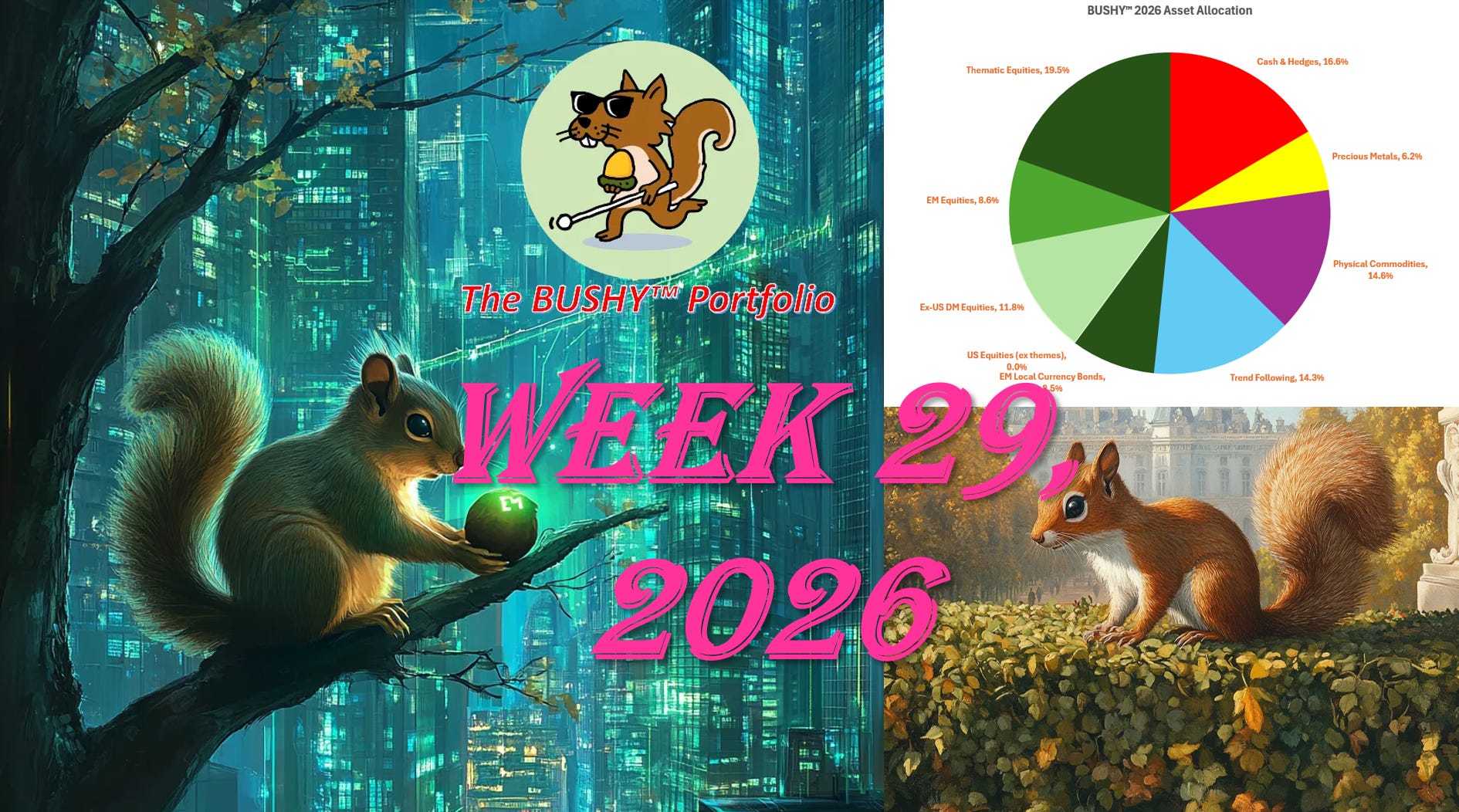
This week’s Benny & The Squirrel Sunday Show covered ‘The Death Shot’. Today’s ‘Start the Week’ note focuses on the implications of such a move for our portfolios.
In the weekend flagship note, the 🐿️ took a look at the opportunity in Turkish equities. Check it out via the link below 👇:

So far, the month of July has been kind to the BUSHY™ portfolio - last week saw solid outperformance versus the ‘target date’ benchmark and the S&P.

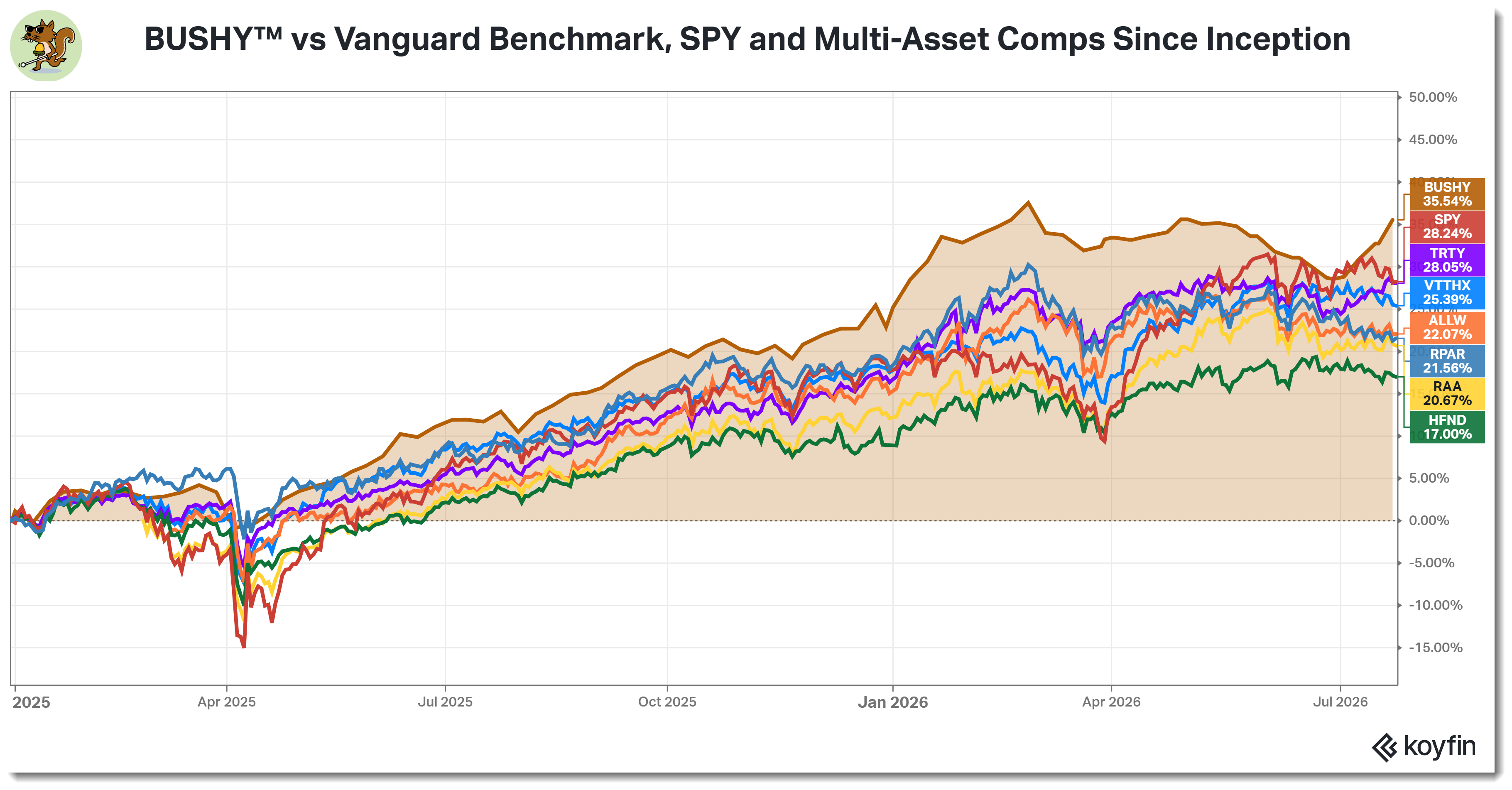
Performance so far in July has been carried by the physical commodity sleeve (mainly oil - let’s see what the latest ‘Sunday night dump’ does), energy equities and by the managed futures / trend-following allocation.
Managing The Death Shot
Before we go to the portfolio reviews, we have a Fed meeting this week and I want to review our exposure to ‘surprise’ hike.
On fixed income, outside of the allocation to EM local currency bonds, BUSHY™’s only exposure to sovereign rates comes via the trend allocation.
Aside from WTMF with a small long Treasury position, the other 5 funds that trade fixed income markets (AHLT, KMLM, DBMF, TFPN and MFTFX) have significant short positions across the curve. This does not come as a huge surprise given the path of yields over the past 3 months.
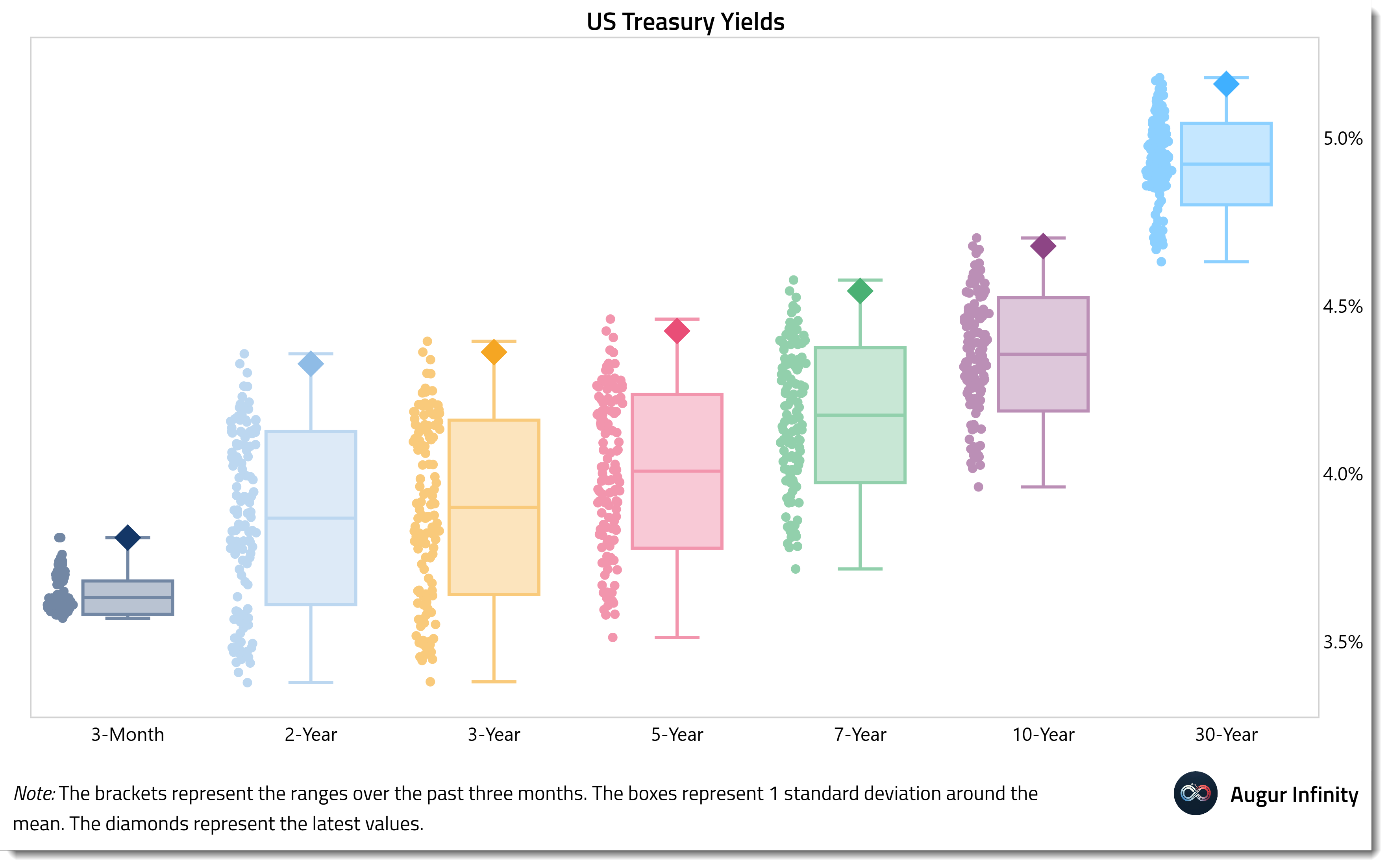
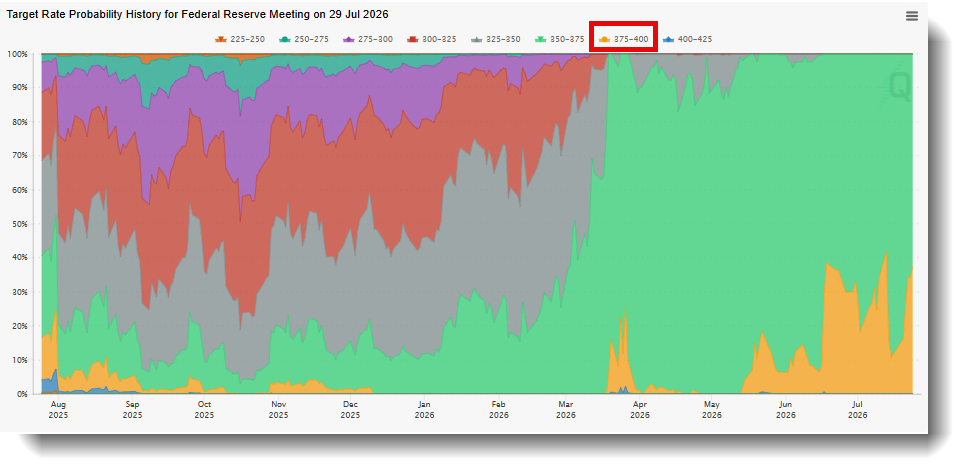
STIR pricing is currently indicating a 34% chance of a 25bps hike at this week’s FOMC meeting. My base case is still ‘no move’. But reputational incentives for Warsh mean we can’t dismiss the risk of a surprise hike entirely.
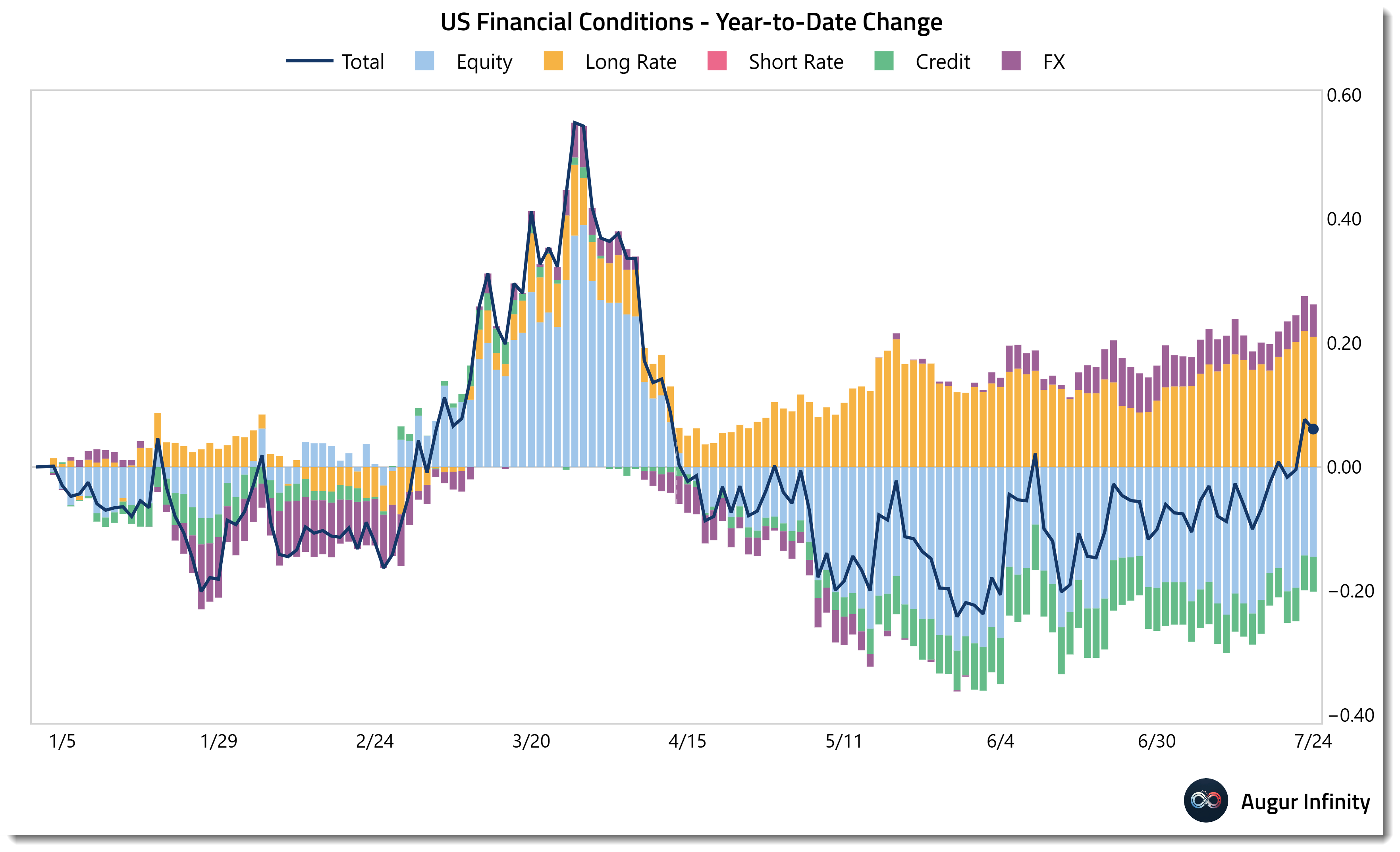
My starting point here is that financial conditions have already tightened significantly since mid June - driven primarily by long rates and FX.
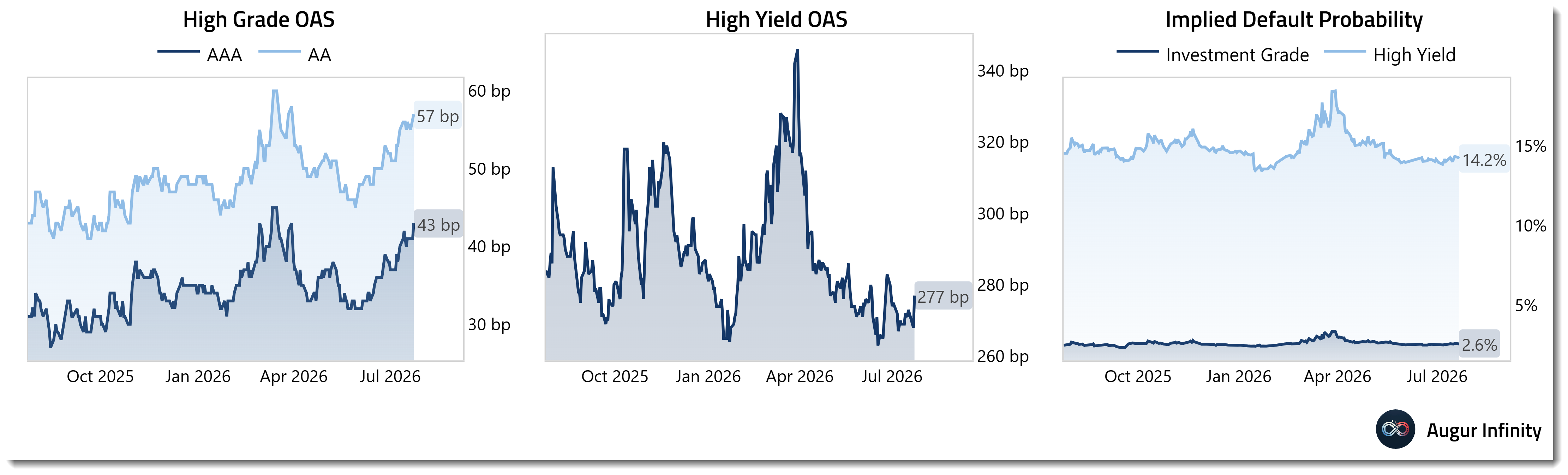
More recently softer equities and widening hyperscaler credit spreads have helped to tighten the market further. The sheer volume of paper hitting the credit market from the AI spenders is almost operating like a form of quantitative tightening.
I am on the record with a view that Kevin Warsh is in a tough spot. Like every new Fed Chair, he is keen to burnish his inflation-busting credentials. But with the government and so much of the economy financed at the front of the curve I am not sure how much scope he has to hike without breaking things.
But the table below (h/t Brent Donnelly) still bothers me. With an annual salary of $253,100, the husband of the Estée Lauder heiress is hardly doing the job for the money. It is all about reputation for these guys - my guess is that he does not want to join Arthur Burns with a green box against his name.
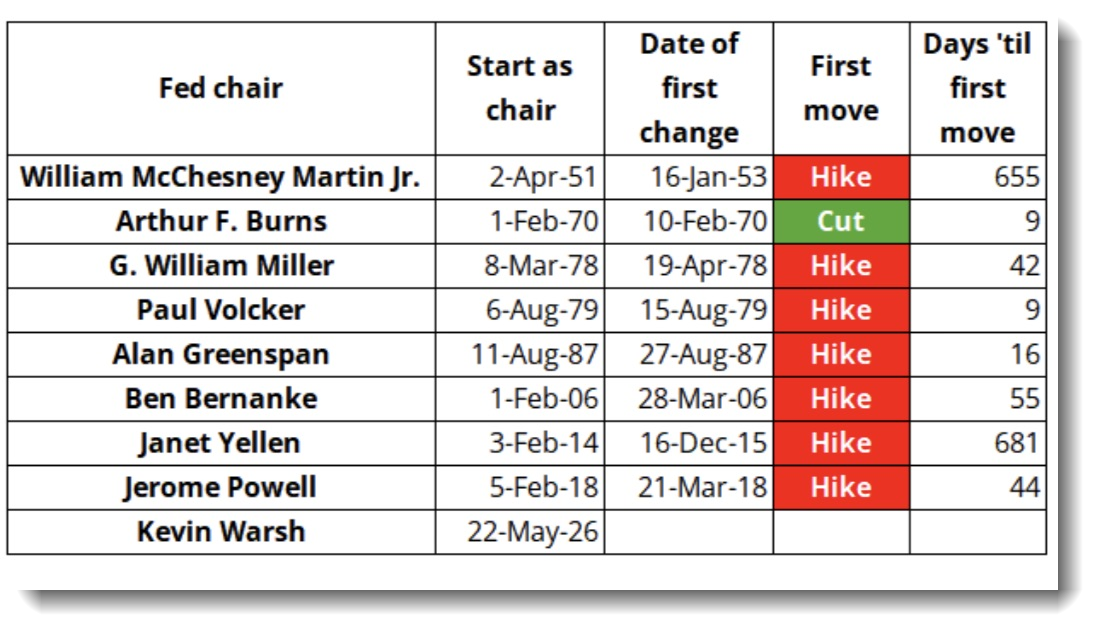
If he thinks he has a hike in him, arguably he gets more reputation value for being ‘brave and early’ - although I am not convinced that he would get much of a reward from the bond vigilantes in terms of reduced term premium.
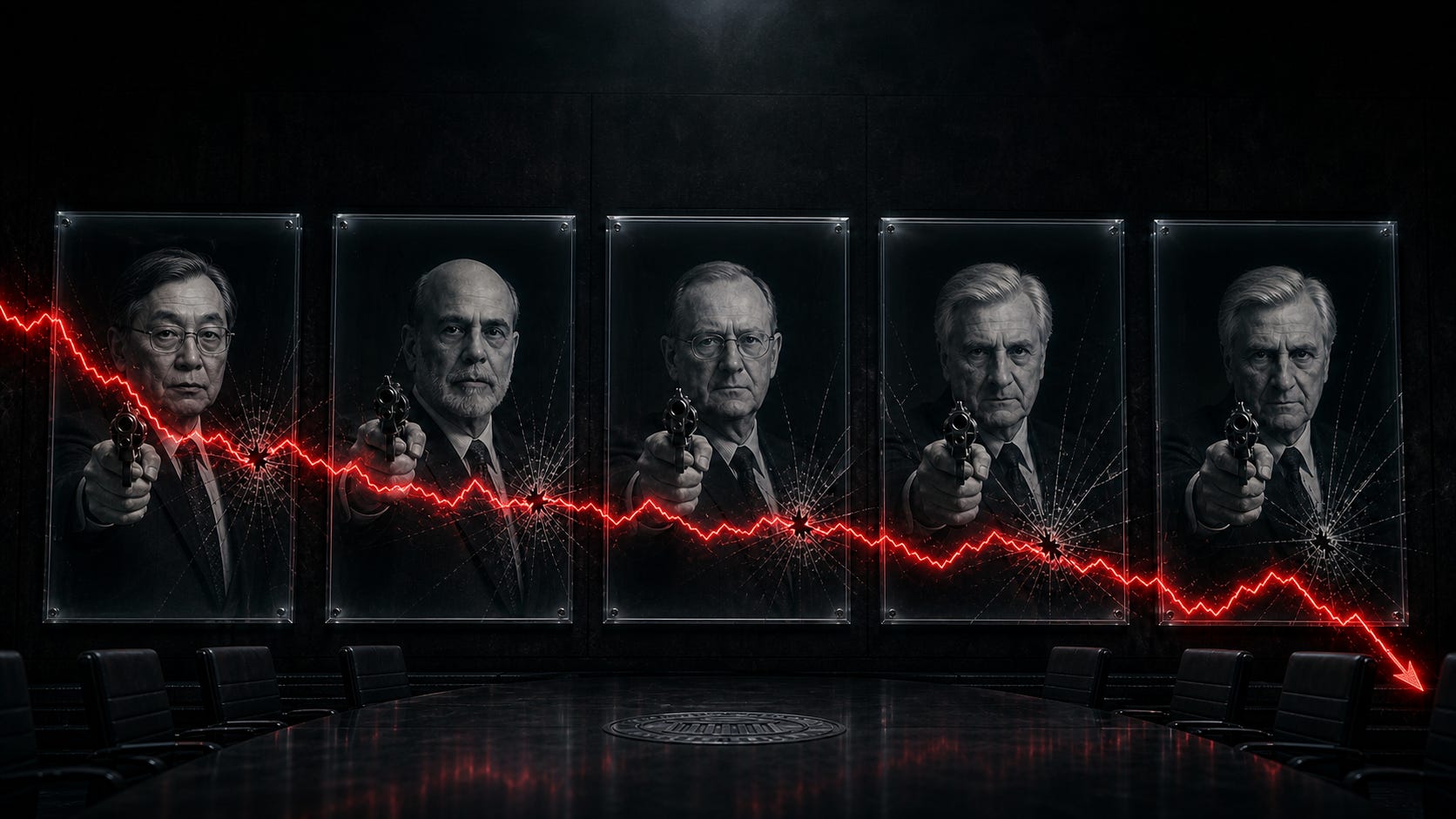
Or, in hiking would Warsh be administering what my podcasting partner Benny likes to call the ‘Death Shot’ - i.e., the hike that ends the business cycle?
The Central Bank ‘Death Shot’ Hall of Fame
So what does a ‘Death Shot’ look like in practice? A few central bankers have already written themselves into the Hall of Fame:
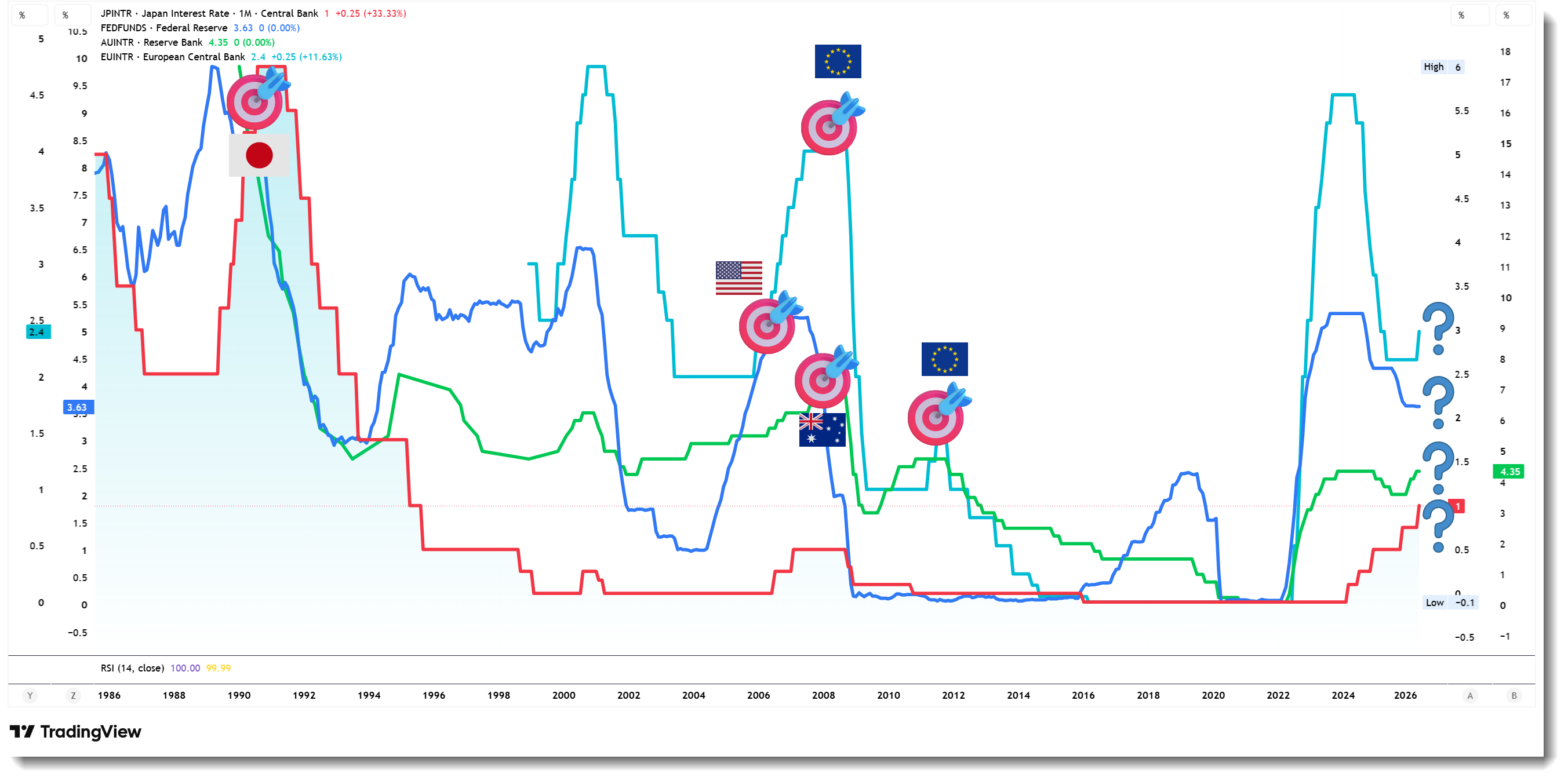
🎯#5 - Japan (1989-1990): The BOJ began its aggressive rate hiking cycle in May 1989 under Satoshi Sumita. The final ‘death shot’ came from his successor Yasushi Mieno who continued to hike aggressively into August 1990, finishing the job and fully puncturing the Japanese asset bubble.
🎯#4 - US (2006): Greenspan may have started the 2004–2006 hiking cycle, but Ben Bernanke took over in February 2006 administered the ‘death shot with the rate increase to 5.25% in June 2006 as the housing market was already beginning to unravel.
🎯#3 - Australia (2008): Glenn Stevens presided over the RBA that hiked the cash rate to 7.25% in March 2008 just as global liquidity was freezing up ahead of the GFC.
🎯#2 & #1 - ECB (2008 & 2011): Jean-Claude Trichet is the all-timer with the top 2 slots on the leaderboard! In July 2008, he infamously raised rates into a slowing economy and rising commodity prices just weeks before the collapse of Lehman Brothers. In 2011, Trichet double-dipped on policy errors, hiking rates twice in 2011 as the European sovereign debt crisis was intensifying.
In every case, the kill shot came after policy had already done most of the tightening. The last hike was the one that tipped risk asset markets over the edge.