


This week’s edition is a Huang-free zone. The 🐿️’s 20 stocks for 20 years project continues this week with the consumer and healthcare sleeve. Folk will still be eating, seeking experiences and getting sick in 2046. Figuring out who will be capturing the economics is much harder!
Note for new subscribers. ‘20-for-20’ is a new Blind Squirrel Macro project that kicked off in August. The 🐿️ is seeking to step away from the short-term noise of markets and attempt to pick a portfolio of global stocks that can work under multiple macro scenarios for the coming 2 decades. Full details in linked note below:

IMPORTANT UPDATE: Blind Squirrel Macro’s annual ‘Black Friday’ subscription offer is launching this weekend. The 🐿️is offering a 30% discount on annual subscriptions. The offer will expire on Cyber Monday (November 30th).
Last Orders
Before trying to underwrite consumer and healthcare stocks for 2 decades, let’s think about whether or not it’s finally time to put a terminal value on alcohol and tobacco stocks.
Not the spreadsheet DCF variety where the forecast period stops and we guess a rate at which the company carries on growing forever - rather terminal as in when a business genuinely runs out of road.
A stock like British American Tobacco did not make it into either of my imagined “Extrapolation” or “Mosaic” “20-for-20” portfolios from 2006. Uncertainty around the long-term future of a cigarette maker would have made a ‘10-bagger’ pretty hard to imagine.
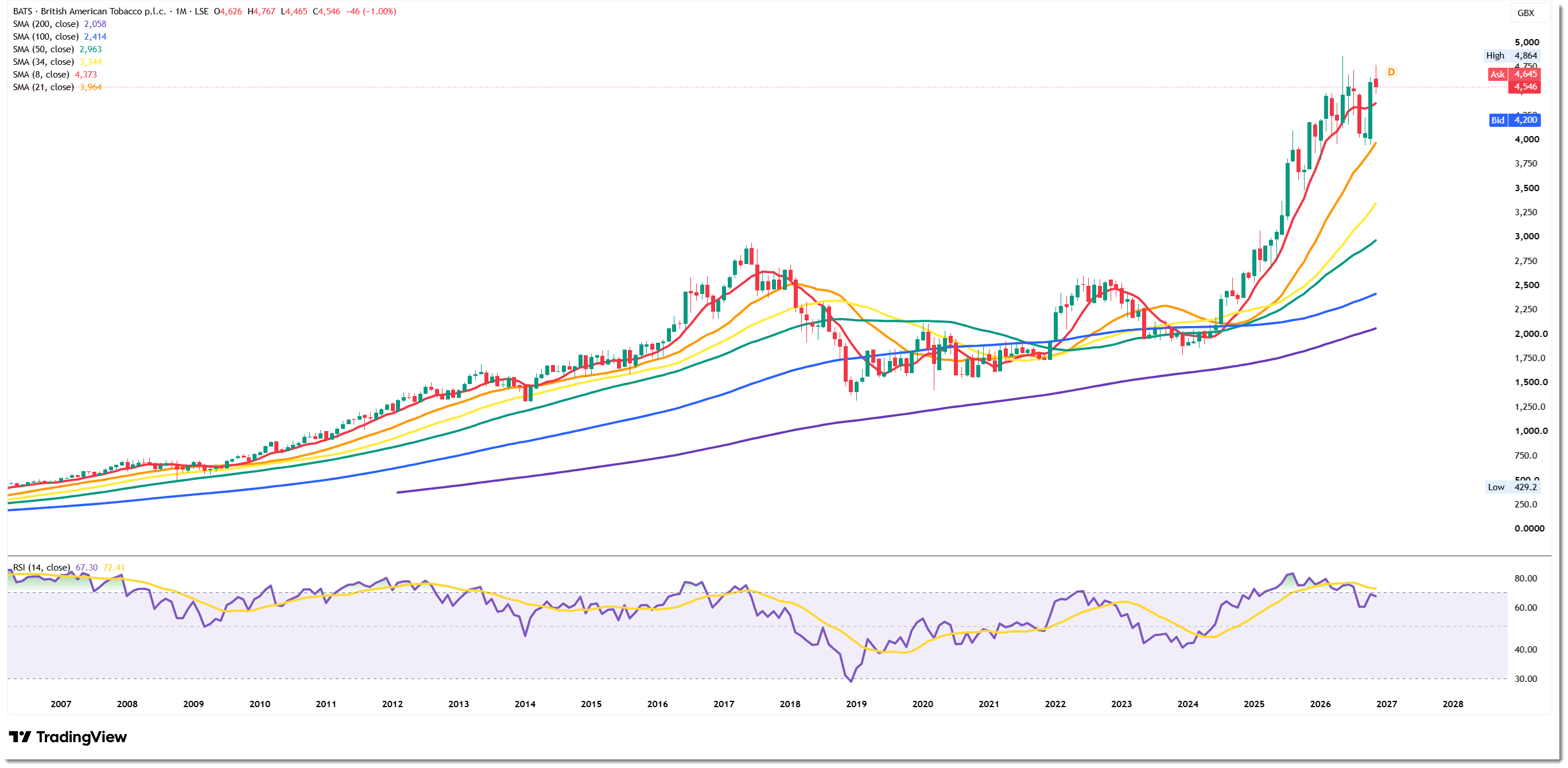
The WHO reckons that the world lost almost 200 million smokers since the start of the 21st Century. Global alcohol consumption looks to be in its fourth year of contraction.
What are the options for the original sin stocks? The first is managed decline - collect (and dividend out) the cash while the business contracts. The second is to make call on a smaller TAM - consumption must eventually stabilize somewhere. The third is reinvention, i.e., when incumbents establish successor businesses (think nicotine pouches and gummies).
Shareholders can lose out on reinvention if they finance the transformation at the wrong price. What if GLP-1 development and adoption comes for all addictions as well as shrinking grocery and restaurant bills?
