


Third Time’s a Charm!
The 🐿️ is a glutton for punishment. I am returning to a battlefield on which I have been twice vanquished in recent years. Back in the spring of 2024, I was bemused by the fact that the AI party had arrived at the door of “the market’s most boring sector”.
While I completely understood the scale of the power demand from AI data centers, market extrapolation of the narrative appeared to have gone wild. Back then I wrote:
“You already know that the 🐿️ is no bond bull. ‘Bond proxy’ utility equities offer the upside of regulated returns and come with a heap of baggage. I am beginning to hear whispers of a bullish thesis for electricity producers around AI data center related power demand. Would love to be contradicted, but I am not sure that I get how (mainstream) utilities can effectively capitalize on this trend.
Sure, our West Coast based tech overlords have finally woken up to the fact that their new AI toys are going to require more electrical power than the grid has to offer them. This is only going to place additional strain on an industry that is already facing numerous challenges:
- Demand - potentially tripling by 2050. Electric vehicle penetration forecasts may now be looking less like hockey sticks, but AI data center power demand is a whole new ball game!
- Ageing power production assets and a grid in desperate need of overhaul and hardening - just as the cost of debt and equity is rising;
- Utilities are consumer-facing businesses. They too have ‘political football’ risk in a populist world (remember that they came after the ‘price gouging’ petrol/gas station owners who make most of their money from selling you coffee and candy!);
- Political / ESG decarbonization targets that have diverted investment away from core infrastructure towards less reliable wind and solar renewable capacity;
- Increased heat and drought conditions. Climate is already creating litigation liabilities for utilities (wildfires in California and Hawaii), now power companies (particularly in the Western US) must deal with disruption from water stress and summer cooling (AC) demand.
There may be individual examples of independent players that can manage the regulatory red tape and capitalize on the opportunity to meet the demand from AI’s hungry power users, but at the end of the day don’t the tech overlords just end up building these capabilities themselves?” — April 2024
The following month (May ‘24) I entered the first of two unsuccessful short positions in the sector over the following twelve months. I had conceded that a couple of individual names - CEG 0.00%↑ and VST 0.00%↑ - could capitalize on the boom with their unregulated asset base, I had not counted on those names dragging the rest of the sector XLU 0.00%↑ with them.
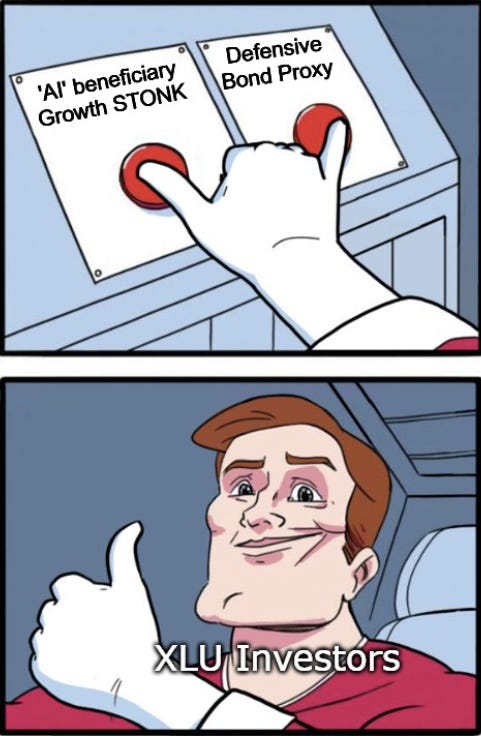
By September, the 🐿️’s frustration was manifesting itself in the form of desperate memes after the combination of the restart announcement for “Three Mile Island” and a Fed rate cut added $17 billion of market cap to Constellation Energy in a single session - an amount equal to more than the cost to build the Vogtle nuclear power plant in Georgia.
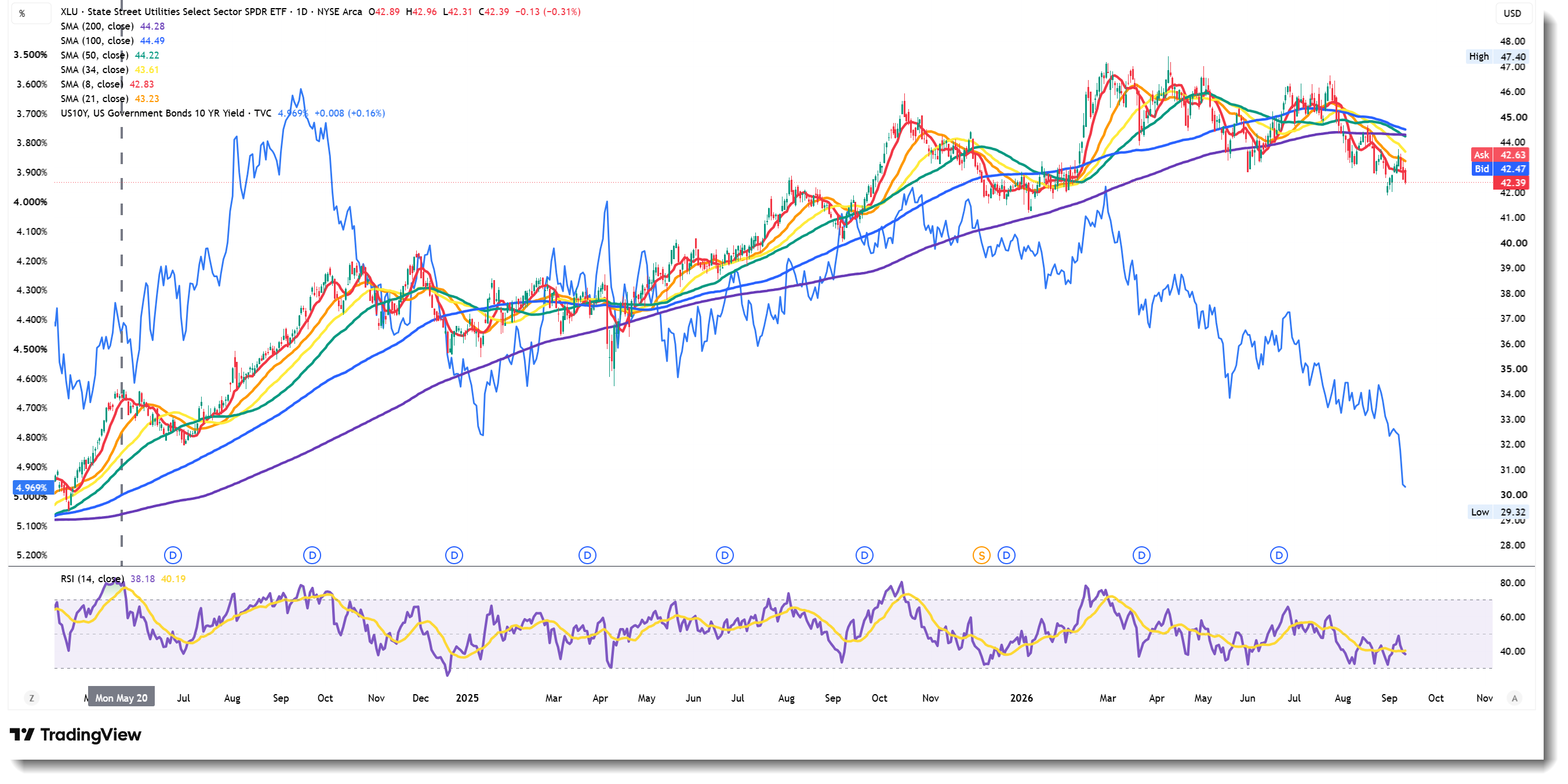
For most of the past two years, the sector’s schizophrenia continued. However, since the outbreak of the Iran war, the bond proxies have steadfastly refused to react to rising Treasury yields.
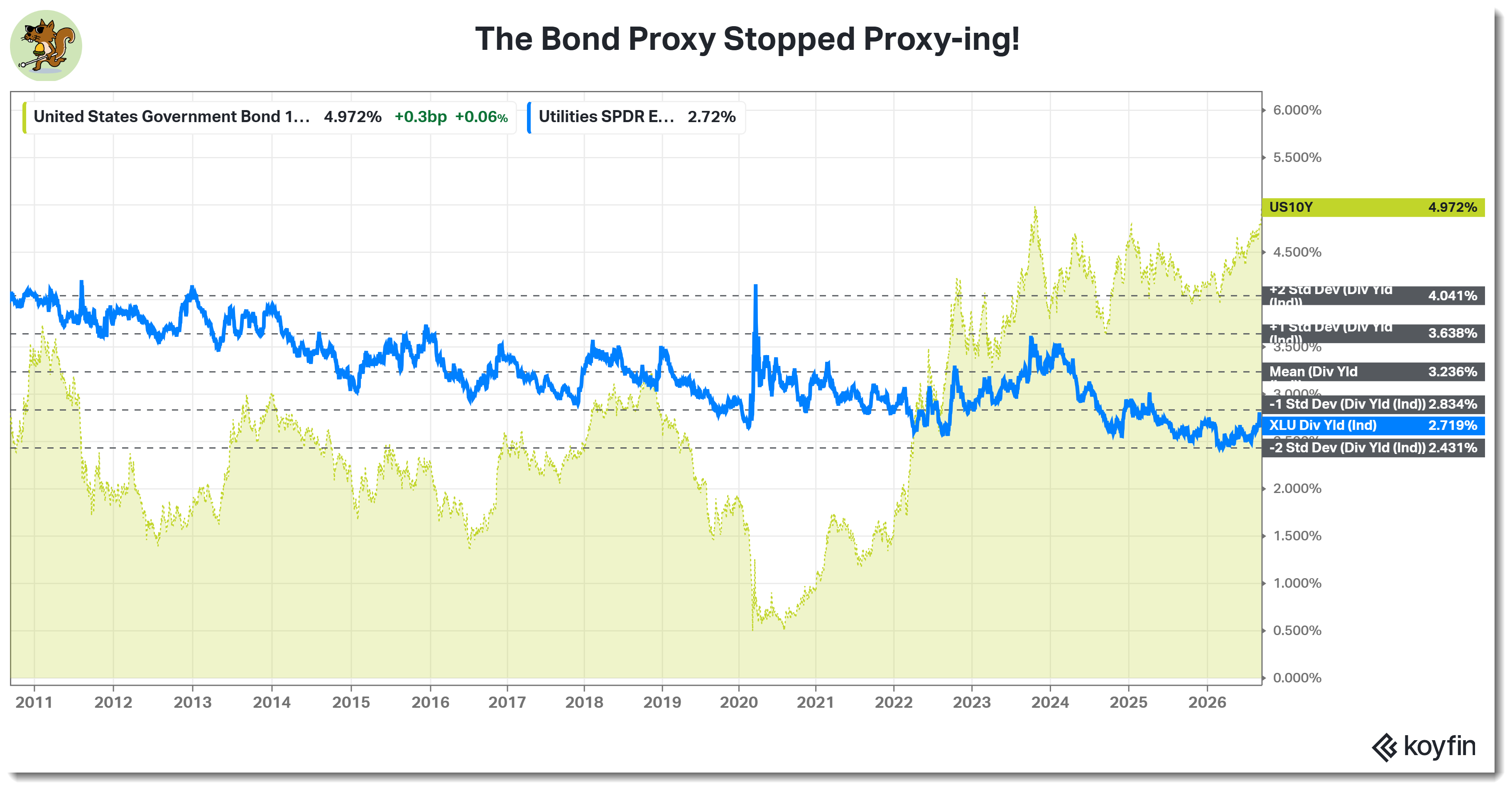
Traditionally, the dividend yield of the XLU offered a modest pickup over 10-year Treasury yields. Today we are looking at a negative spread of over 225bps - meaningful positive carry on a short position.
Enter Politics…
The “political football” risk that I identified two years ago has suddenly taken center stage. And it came fast. Voters have started to join the dots in terms of the correlation between AI data center construction and rising electricity prices.
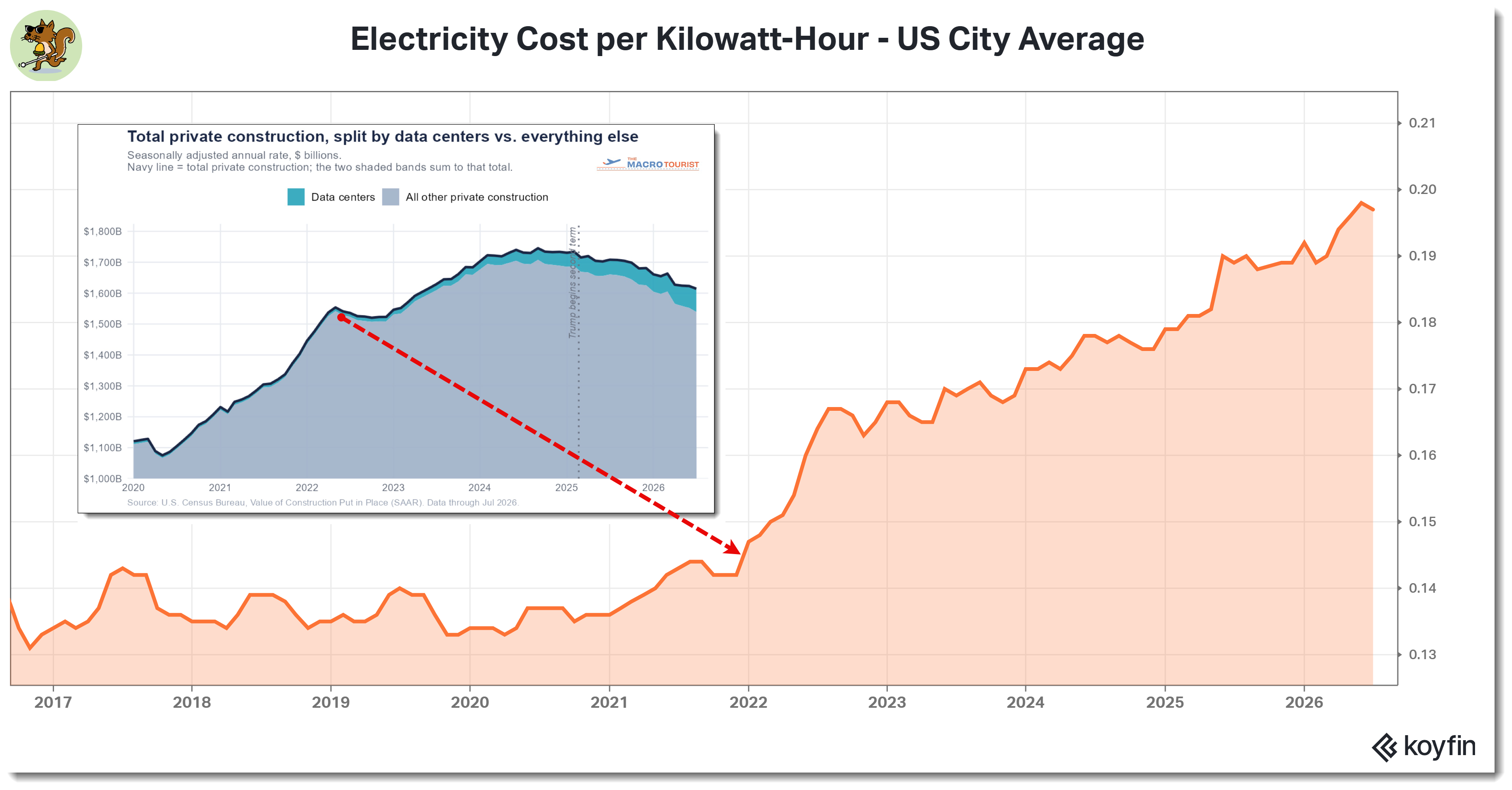
US city average electricity prices are up over 20% since the public launch of ChatGPT in November of 2022 - and you can see the footprints that drove the initial move in pricing earlier that year in The MacroTourist chart from Kev inset above.
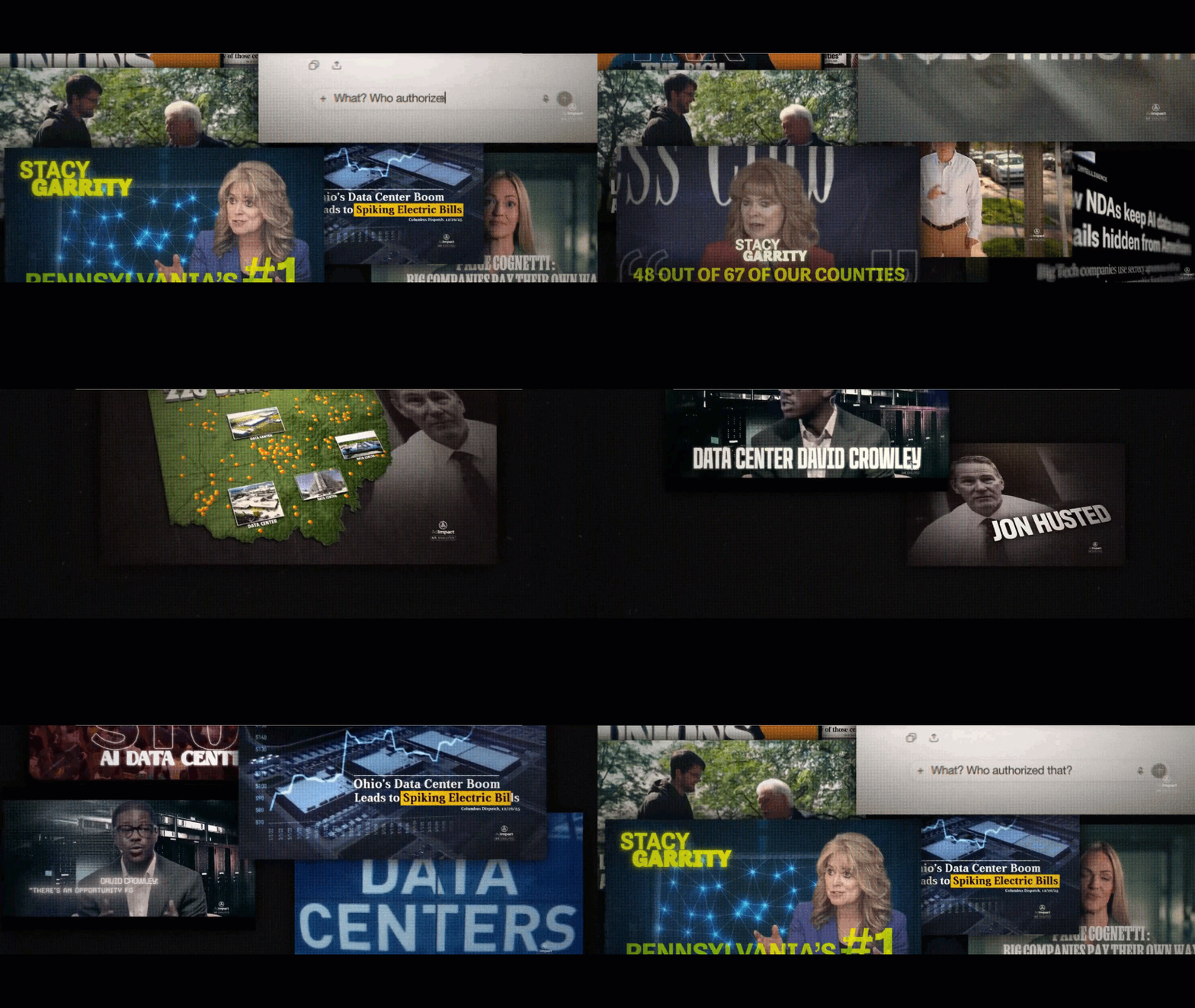
Recent polling suggests the US citizens would prefer to live within 10 miles of a nuclear power station than to a data center. Over 8% of August political broadcast spend ahead was on data center attack ads.
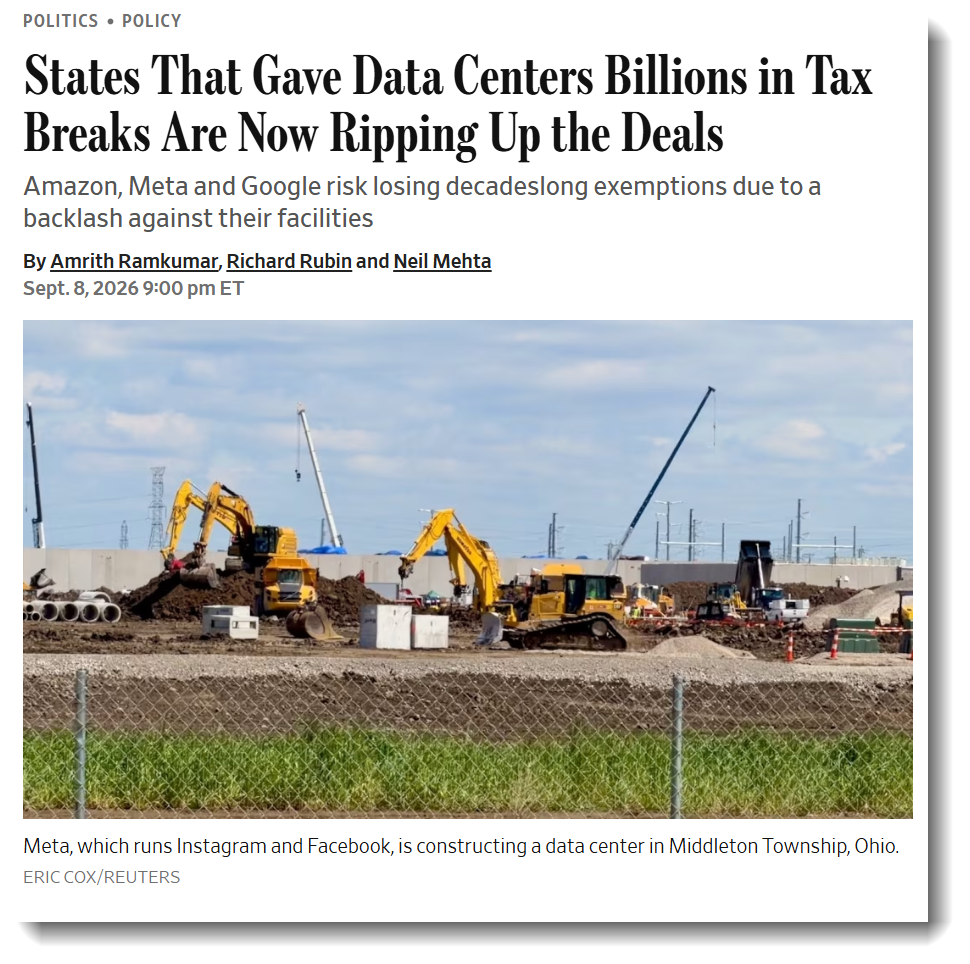
Nervous politicians have noticed and are re-trading on the tax breaks offered to lure hyperscaler investment only a matter of a few quarters ago.
State and local legislative agendas are piling up with bills seeking to restrict or delay the build out. And it is bipartisan.
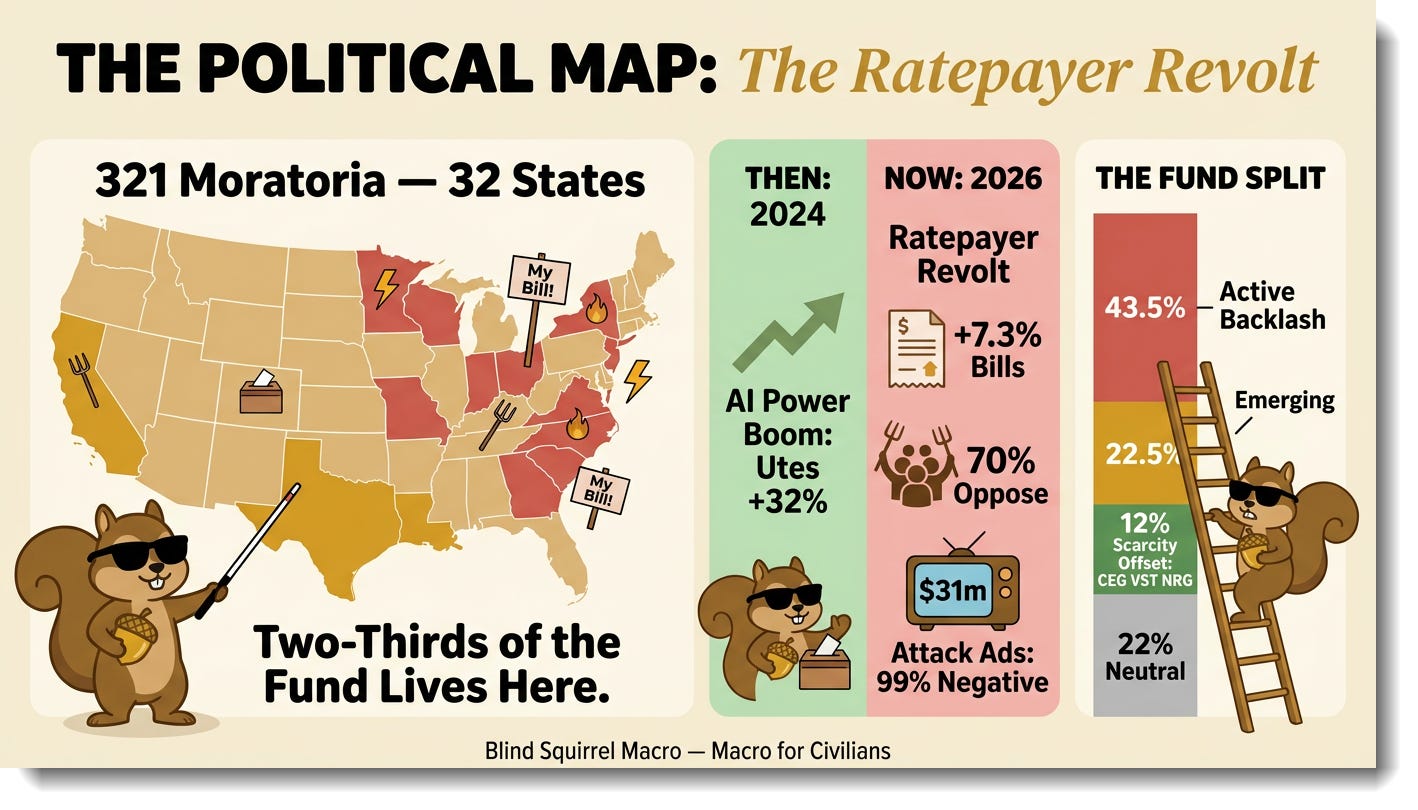
Statewide bills and moratoria mostly fail - but municipal and county action appears to be sticking. 66% of the XLU constituents by market cap have a dog in the fight.
If the AI power demand story is real, why has the market treated all utilities as ‘scarcity winners’? Which parts of XLU are actually exposed to the downside when affordability politics rear their head?
